Ran Laurie: The Real Doctor, Olympic Champion, and Quiet Father Behind Hugh Laurie’s Legacy
William George Ranald Mundell Laurie led a remarkable life as a British physician, colonial administrator, Olympic gold-medal rower, and father of actor Hugh Laurie.

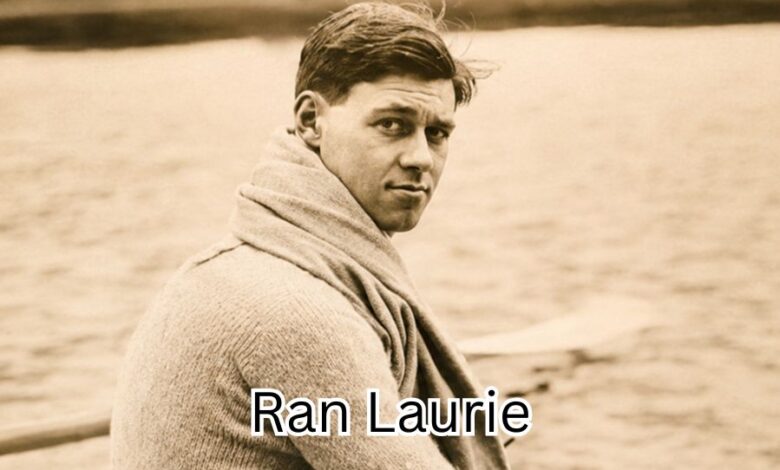
Ran Laurie was far more than the father of a famous actor. Born William George Ranald Mundell Laurie, he lived a life that combined elite sport, public service, medicine, and family responsibility. He is widely remembered as a British Olympic gold-medalist rower, a physician, and the father of Hugh Laurie, the acclaimed actor and comedian best known internationally for playing Dr. Gregory House in the television drama House. What makes Ran Laurie’s story especially meaningful is the contrast between public achievement and personal modesty. He won one of the highest honors in world sport, served abroad during a complex period of British colonial administration, later trained as a doctor, and then spent decades caring for ordinary patients.
Ran Laurie’s life is of interest because it connects several powerful themes: Olympic success, British rowing history, the Cambridge sporting tradition, medical service, and Hugh Laurie’s family background. Yet his story should not be reduced to a celebrity connection alone. Before Hugh Laurie became famous, Ran Laurie had already built a reputation as a disciplined athlete and a deeply respected doctor. His legacy is not loud or theatrical; it is quiet, steady, and rooted in character.
Quick Bio
| Field | Details |
|---|---|
| Full Name | William George Ranald Mundell Laurie |
| Known As | Ran Laurie |
| Date of Birth | 4 May 1915 |
| Birthplace | Grantchester, Cambridgeshire, England |
| Date of Death | 19 September 1998 |
| Age at Death | 83 years |
| Nationality | British |
| Profession | Physician, colonial administrator, Olympic rower |
| Famous For | Winning Olympic gold in rowing at the 1948 London Olympics |
| Olympic Event | Men’s coxless pairs |
| Rowing Partner | Jack Wilson |
| Education | Selwyn College, Cambridge |
| Children | Hugh Laurie and three other children |
| Legacy | Remembered as a modest Olympic champion, respected doctor, and father of actor Hugh Laurie |
Early Life and Education of Ran Laurie
Ran Laurie was born on 4 May 1915 in Grantchester, Cambridgeshire, England. His background brought him into close contact with the academic and rowing culture that would later shape much of his life. He was educated at Monkton Combe School, where his rowing ability began to develop seriously. Rowing requires physical strength, patience, rhythm, and mental control, and these qualities became central to Laurie’s identity.
He later attended Selwyn College, Cambridge, where his talent as an oarsman grew even stronger. Cambridge rowing was highly competitive, and Laurie quickly became associated with excellence on the water. His years at Cambridge were not simply a student sporting phase; they laid the foundation for an athletic career that would eventually lead him to the Olympic Games.
Cambridge Rowing and the Boat Race Years
At Cambridge, Ran Laurie joined one of Britain’s top rowing traditions. He rowed for Cambridge in the 1930s, winning Boat Races against Oxford. The Boat Race is a major event in British amateur rowing. These races helped make Laurie a leading rower of his time.
Laurie’s rowing style was disciplined and controlled. He did not seek attention, focusing on his performance instead. This focus on duty, not display, was a constant throughout his life.
Ran Laurie and the 1936 Olympic Games
Ran Laurie represented Great Britain at the 1936 Berlin Olympics as part of the British eight. The crew finished fourth, narrowly outside the medals. Although he did not win an Olympic medal in 1936, the experience placed him on the international stage and proved that he belonged among the world’s finest rowers.
The 1936 Olympics were historically significant for reasons far beyond sport, as they took place in Nazi Germany during a tense period in European history. For British athletes such as Laurie, competing in Berlin was part of a difficult and politically charged era. His rowing career, like that of many athletes of his generation, was later interrupted by the Second World War and by the responsibilities that came with public service.
Partnership with Jack Wilson
One of the most important relationships in Ran Laurie’s athletic career was his partnership with Jack Wilson. The two men became closely linked through rowing and through service in Sudan. Their partnership was unusual because it survived long gaps, demanding careers, and wartime disruption. Together, they became one of Britain’s most memorable rowing pairs.
Laurie and Wilson won the Silver Goblets at Henley Royal Regatta in 1938. After years away, they returned to win again in 1948—a rare feat, as both were older and had been away from top competition.
Olympic Gold at the 1948 London Games
Ran Laurie’s defining sporting moment came at the 1948 London Olympics. Rowing events were held at Henley-on-Thames, a place already rich in tradition. This time, Laurie and Jack Wilson competed for Great Britain in the men’s coxless pairs and won the gold medal, a triumph built upon years of shared experience and perseverance.
Their win was about experience, endurance, and trust. They were seasoned men returning from demanding careers, yet still reached the Olympic peak. That 1948 gold medal secured Ran Laurie’s legacy in British sports.
Why the 1948 Win Still Matters
Ran Laurie’s Olympic gold represents more than a single race; it demonstrates how discipline built over many years can survive interruption. It also reflects an era when amateur athletes balanced sport with demanding careers. Laurie was not a full-time professional athlete, but she succeeded thanks to commitment, partnership, and a deep understanding of rowing.
For those searching for “Ran Laurie Olympic rower” or “Ran Laurie gold medal,” the 1948 win is his central achievement. It keeps his name present in British rowing history.
Ran Laurie’s Career in Sudan and Medicine
Before becoming a doctor, Ran Laurie served in Sudan as part of the Sudan Political Service. This placed him within the British colonial administrative structure of the time. Any modern biography should describe this part of his life carefully and without romanticizing empire. It was a public service role shaped by the historical context of British colonial rule, and it formed an important chapter in his adult life.
After returning to Britain, Laurie made a significant career change. He qualified as a doctor in the 1950s and went on to work as a general practitioner in Oxford for more than 30 years. This second career may be even more revealing than his Olympic success, as it required patience, empathy, consistency, and responsibility—qualities that had supported his earlier achievements on and off the water.
The Real Doctor Behind Hugh Laurie’s Famous Role
Ran Laurie’s medical career became especially interesting to the public because of his son Hugh Laurie’s later fame. Hugh became internationally recognized for playing Dr. Gregory House—a brilliant but difficult fictional physician. The irony was striking: while Hugh earned notoriety portraying a doctor, his father had quietly spent decades practicing medicine.
Hugh Laurie has spoken about feeling a sense of irony and even guilt at being highly paid to play a fake doctor, while his father had been a genuine, dedicated physician. This contrast adds emotional depth to the Laurie family story. It also helps explain why Ran Laurie remains a figure of interest not only to rowing historians but also to fans of Hugh Laurie.
Family Life and Influence on Hugh Laurie
Ran Laurie married Patricia Laidlaw, and together they had four children, including Hugh Laurie. Hugh was born in Oxford in 1959 and grew up in a household shaped by achievement, intelligence, and restraint. This environment, shaped by his father’s example, had a deep and lasting influence on Hugh.
Hugh Laurie rowed in his youth and, like his father, attended Selwyn College, Cambridge. Though Hugh became an entertainer, rowing and Cambridge remained important early on. Ran Laurie’s example set a standard of discipline beyond sport.
A Father Remembered for Modesty
One of the most striking parts of Ran Laurie’s reputation is his modesty. While many Olympic champions are remembered for their medals, photographs, and statistics, Laurie is often remembered for his character. He did not base his identity on fame; instead, he moved from one demanding chapter of life to another with seriousness and restraint, shaping both his life and legacy.
This modesty highlights another central theme: success that is marked by character rather than fame. In an age of self-promotion, Ran Laurie’s example demonstrates that integrity, discipline, and humility are powerful markers of personal achievement. He competed, served, cared, and raised a family—embodying understated greatness.
Ran Laurie’s Death and Lasting Legacy
Ran Laurie died on 19 September 1998 at age 83. His legacy continues in British rowing, in Olympic records, and in the memories of Hugh Laurie’s family. He is remembered as a gold-medal athlete, Cambridge oarsman, doctor, and a man of humility.
For many people, the name Ran Laurie first comes to mind because of Hugh Laurie. But the more one learns about him, the clearer it becomes that he deserves recognition in his own right. His life tells the story of a man who excelled without noise, served without vanity, and left behind a legacy of quiet greatness.
(FAQs)
Who was Ran Laurie?
Ran Laurie was a British physician, former colonial administrator, and Olympic gold-medal rower. His full name was William George Ranald Mundell Laurie. He was also the father of actor Hugh Laurie.
What was Ran Laurie famous for?
Ran Laurie was famous for winning an Olympic gold medal in rowing at the 1948 London Olympics. He competed in the men’s coxless pairs with Jack Wilson and became an important figure in British rowing history.
Was Ran Laurie really a doctor?
Yes, Ran Laurie was a real doctor. After his rowing and administrative career, he qualified as a physician and worked for many years as a general practitioner in Oxford.
How is Ran Laurie connected to Hugh Laurie?
Ran Laurie was the father of Hugh Laurie, the British actor, comedian, writer, and musician. Hugh Laurie became globally famous for playing Dr. Gregory House on House, which created an interesting contrast, as his father had been a real doctor.
Did Ran Laurie compete in the Olympics?
Yes, Ran Laurie competed in the 1936 Berlin Olympics and the 1948 London Olympics. His greatest Olympic achievement came in 1948, when he won gold in the coxless pairs event with Jack Wilson.
What is Ran Laurie’s legacy?
Ran Laurie’s legacy is built on Olympic excellence, medical service, modesty, and family influence. He remains respected as a British Olympic champion and as the father whose real-life medical career gave deeper meaning to Hugh Laurie’s famous fictional doctor role.