Stand Pile: Powerful Meaning, Uses, and Importance in Construction
A clear guide to understanding stand piles, pile foundations, stability, and structural support.

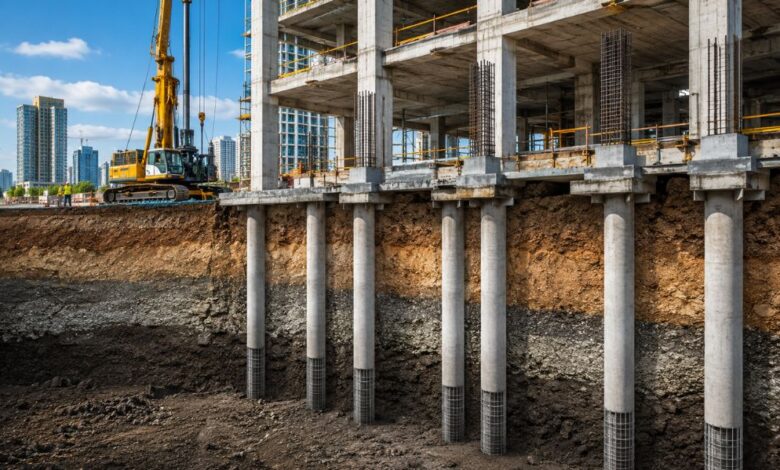
Stand Pile is not always a fixed technical term in everyday English. Often, it describes a pile, post, column, or foundation element that supports a structure. In construction, a pile is a long, strong member set deep into the soil to support heavy structures. People searching for Stand Pile want to know how this support works, why pile foundations are used, or how deep systems keep structures stable.
The easiest way to understand Stand Pile is to connect it with the idea of structural support. A building does not stand safely only because of walls and columns above the ground. It also depends on what happens underground. If the soil is weak, wet, loose, or unable to support heavy loads, a standard shallow foundation may not be sufficient. A pile foundation helps transfer the weight of the structure to deeper and stronger soil layers. This is why pile systems are widely used in modern construction, especially where strength, balance, and long-term safety are important.
What Is a Stand Pile in Simple Words?
In simple terms, a stand pile is a strong vertical support that helps a structure stand firmly. It may be made of concrete, steel, timber, or a combination of materials, depending on the project requirements. The purpose is to carry the load from the structure above and transfer it safely into the ground below.
This concept is especially important in areas where the upper soil is not strong enough. For example, coastal areas, riverbanks, reclaimed land, soft clay, and loose sandy ground often require deeper support. In such places, piles serve as hidden legs beneath a structure. They may not be visible after construction, but they play a major role in keeping the building steady.
Why the Stand Pile Is Often Confused
The phrase ” stand pile ” is sometimes confused with similar words such as pile stand, standing pile, standpipe, foundation pile, or support pile. A standpipe is different because it usually refers to a vertical pipe used for water supply or fire protection. A pile foundation, on the other hand, is related to structural engineering and ground support. This difference is important because using the wrong term can create confusion in construction, plumbing, product searches, or technical writing.
Importance of Stand Pile in Construction
Stand Pile systems are important because they provide stability where ordinary foundations may fail. A structure places a heavy load on the ground. If the soil cannot handle that load, the building may settle unevenly, crack, tilt, or become unsafe. Piles reduce this risk by transferring the load to a deeper, stronger layer.
Piles also help control settlement—the downward movement of a structure after construction. While minimal even settlement is normal, uneven settlement can cause serious damage. A stand pile support distributes loads more safely and keeps the structure balanced.
Load Transfer and Structural Safety
The main job of a pile is load transfer. The building’s weight is transmitted through columns, beams, and foundation elements to the piles. The piles then transfer that weight either through their tips, their sides, or both. Some piles carry loads mainly at the bottom, while others gain strength from friction along their surface. This makes pile foundations useful in different soil conditions.
Why Soil Condition Matters
Soil is not the same everywhere. Some ground is firm and rocky, while other ground is soft, wet, or unstable. Before using a stand pile or a pile foundation, engineers usually study the soil to assess its strength, depth, moisture content, and bearing capacity. A good foundation design always depends on proper soil investigation. Without understanding the ground, even a strong structure can face long-term problems.
Common Types of Pile Foundations
Construction uses several types of pile foundations. Driven piles are pushed or hammered into the ground. Bored piles are made by drilling a hole and filling it with reinforced concrete. Screw piles are rotated into the soil. Each type has a specific purpose, cost, strength, and installation method.
Concrete piles are common for strength and durability. Steel piles are used where deep penetration is needed. Timber piles, though older, are still used in specific conditions. The choice depends on building size, soil, budget, and engineering design.
Stand Pile for Buildings, Bridges, and Heavy Structures
Stand pile support is not limited to houses. It is also used for bridges, towers, marine structures, retaining walls, industrial buildings, and large commercial projects. Bridges often require deep-pile support because their loads are heavy and their foundations may be near water. High-rise buildings also rely on deep foundations when the surface soil cannot safely support their weight.
Benefits of Using Stand Pile Support
The main benefit of Stand Pile support is stability. It allows construction on land that may otherwise be unsuitable, reduces movement, increases load capacity, and improves long-term performance.
Another benefit is flexibility. Pile foundations can be designed for many types of ground conditions. They can be used in small projects as well as very large infrastructure work. When properly designed and installed, they provide strong support for decades.
Long-Term Value of Proper Foundation Design
A strong foundation may not always be visible, but it protects the entire structure. Poor foundation design can lead to expensive repairs, safety risks, and reduced property value. A properly planned stand-pile system can save money in the long run by preventing serious structural issues before they arise.
Stand Pile and Modern Construction Quality
Modern construction requires safety, precision, and durability. Stand pile systems help engineers manage difficult soil conditions. Better machinery, testing, and design software make pile foundations more accurate and reliable.
Quality control matters during installation. Check pile depth, alignment, material strength, and load capacity carefully. One small mistake can affect the entire structure. Always follow engineering standards during installation.
(FAQs)
What does Stand Pile mean?
A stand pile typically refers to a standing support or pile-type foundation that helps keep a structure stable. Its meaning can vary by context.
Is a stand pile the same as a pile foundation?
In many construction-related contexts, Stand Pile can be understood as a form of pile foundation support. However, the more accurate technical term is usually “pile foundation” or “foundation pile”.
Why are piles used in construction?
Piles are used when surface soil is weak or a structure is too heavy for shallow foundations. They move weight to deeper, stronger layers.
Is Stand Pile the same as standpipe?
No, Stand Pile and standpipe are different. A standpipe is a vertical pipe for water or fire systems. A pile supports a foundation.
Where is Stand Pile support commonly used?
Stand pile support is common in buildings, bridges, towers, marine structures, retaining walls, and spots with weak soil.
Conclusion
Stand Pile is a useful keyword when understood through the lens of construction support, pile foundations, and structural stability. Although the phrase can be ambiguous, its most practical meaning relates to a strong vertical support that helps a structure stand firmly on challenging ground. In construction, a building’s strength begins below the surface, and pile systems play a major role in that hidden strength.
A well-designed pile foundation improves safety, reduces settlement, supports heavy loads, and allows construction on difficult soil. Whether the project is a house, bridge, tower, or commercial building, the idea behind Stand Pile remains the same: strong support creates strong structures. Understanding this concept helps readers, builders, property owners, and students recognise why foundation design is one of the most important parts of any successful construction project.