Mark Herrema is reshaping climate-tech by transforming greenhouse gases into valuable, sustainable materials.
A focused exploration of Newlight Technologies co-founder Mark Herrema, his driving vision for Aircarbon, and how his leadership is shaping sustainable innovation.

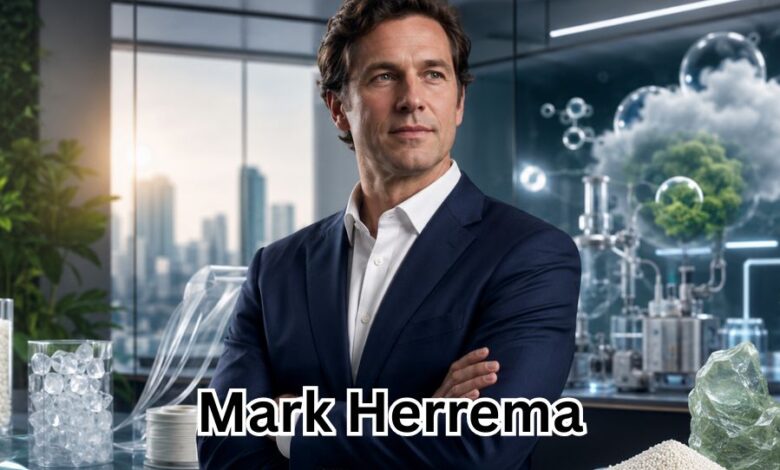
Mark Herrema is widely known as the co-founder and Chief Executive Officer of Newlight Technologies, a climate-tech company built around one ambitious idea: greenhouse gases should not only be reduced, but also transformed into useful materials. In a world where plastic pollution and climate change are among the biggest environmental challenges, Herrema’s work stands out for its practical way of connecting science, business, and sustainability. His company’s best-known innovation, Aircarbon, is a biomaterial made from air and greenhouse gas through a process inspired by nature.
What makes Mark Herrema’s story interesting is not only the technology itself but the thinking behind it. Many companies approach carbon as a waste problem. Herrema approached it as a resource. That shift in perspective helped Newlight Technologies develop a material that aims to replace traditional oil-based plastics in products used across industries such as foodware, fashion, packaging, and consumer goods. His journey shows how a bold environmental idea can become a serious commercial platform when supported by long-term research, persistence, and leadership.
Quick Bio
| Field | Details |
|---|
| Full Name | Mark Herrema |
| Profession | Entrepreneur, Co-founder, and CEO |
| Known For | Co-founding Newlight Technologies |
| Company | Newlight Technologies |
| Famous Innovation | Aircarbon |
| Main Industry | Climate Tech and Sustainable Materials |
| Education | Princeton University graduate |
| Key Work | Turning air and greenhouse gases into high-performance sustainable materials |
| Recognition | Known for leadership in carbon conversion, biomaterials, and environmental innovation |
Early Life, Education, and Academic Foundation
Born in the United States, Mark Herrema developed early interests in big systems, problem-solving, and the link between science and society. At Princeton University, he studied Politics and Political Theory and graduated magna cum laude. Despite his political degree, he was also drawn to science, math, physics, and chemistry. This blend created the interdisciplinary approach central to Newlight Technologies.
Herrema’s education went beyond classroom lessons. It equipped him to view global challenges from multiple angles. Climate change is not just a scientific issue, and plastic pollution isn’t only a manufacturing problem. Both connect to economics, consumer habits, policy, supply chains, and technology. This background led him to seek market-driven solutions, not just laboratory ones.
The Princeton Influence
During his time at Princeton, Herrema explored ideas connecting markets and public goods. This way of thinking later became visible in Newlight’s mission. Instead of depending only on regulation or charity to address climate change, he wanted to create a material that businesses and consumers could use because it made practical sense. That market-driven approach became one of the strongest features of his leadership style.
The Founding of Newlight Technologies
In 2003, Mark Herrema co-founded Newlight Technologies with Kenton Kimmel. Their founding question was simple but bold: Could greenhouse gases become raw material for high-performance products? The idea seemed unrealistic, as turning invisible gas into solid material required scientific breakthroughs, engineering, funding, and years of trial and error.
Newlight’s early years were not built on quick success. The company spent a long time researching how microorganisms found in nature could convert atmospheric air and greenhouse gases into a useful polymer. This patient research process is one of the reasons Herrema is often discussed as a serious climate-tech entrepreneur rather than just a business founder with a green idea. He and his team had to prove that their technology could be more than a concept. They had to show that it could produce material at a useful scale and meet real performance needs.
Building a Company Around a Difficult Idea
Many startups begin by chasing fast growth, but Newlight Technologies had to begin with deep science. Herrema’s leadership required persistence because the company was working on a problem with no clear roadmap. The goal was not simply to make a biodegradable material. The goal was to make a material from greenhouse gases that could compete with traditional plastics in strength, usability, and commercial value.
What Is Aircarbon?
Aircarbon is Newlight Technologies’ signature biomaterial. It is based on PHB, a natural polymer found in living systems. Newlight uses microorganisms found in nature to convert air and greenhouse gas into this material. The result is a meltable biomaterial that can be formed into products such as fibers, sheets, solid parts, foodware, and other consumer goods.
This innovation is significant because most traditional plastics are derived from fossil fuels, persist in the environment, and pollute when improperly managed. Aircarbon offers an alternative that links material production to carbon use, focusing on using carbon already present in greenhouse gases.
Why Aircarbon Attracts Attention
Aircarbon attracts attention because it sits at the intersection of carbon capture, biomaterials, and plastic replacement. For brands, it enables products with lower environmental impact. For consumers, it represents a visible form of climate innovation, appearing in everyday items rather than hidden in industrial systems.
Aircarbon and the Future of Materials
The future of materials will likely depend on whether sustainable alternatives can meet the performance and price expectations of existing products. Herrema’s work is important because it does not treat sustainability as a luxury feature. Instead, Newlight Technologies aims to make sustainability part of the material itself. If greenhouse gas-based materials can scale successfully, they could influence how industries think about plastic, leather alternatives, packaging, and manufacturing.
Mark Herrema’s Leadership Style
Mark Herrema’s leadership is defined by vision, patience, and practical execution. He addresses climate change as both a danger and an opportunity to create new industries. This optimistic but grounded approach balances scientific ambition with commercial reality in climate technology.
Herrema has also shown the ability to communicate complex science in a way that people can understand. Aircarbon involves microorganisms, greenhouse gases, polymers, and manufacturing systems, but the core idea is easy to grasp: nature already knows how to turn carbon into useful material, and Newlight is applying that natural process to modern production. This clear storytelling has helped the company gain attention from the media, sustainability experts, and major industries.
Recognition and Industry Impact
Mark Herrema and Newlight Technologies have received recognition for their contributions to climate innovation and biomaterials. Herrema is a World Economic Forum Technology Pioneer, and Newlight is recognized for turning greenhouse gases into sustainable materials. In 2023, Herrema was also featured in TIME100 Climate, highlighting climate solution leaders.
Recognition is important because it places Herrema among entrepreneurs who are moving climate action into production. Newlight’s work is not only about new materials—it’s about challenging the idea that business growth and environmental progress must clash.
Challenges in Scaling Climate Technology
Mark Herrema’s story also highlights the challenges of climate innovation. Developing new materials demands years of testing, capital, manufacturing, and trust. Even with strong products, scaling across industries is hard. Traditional plastics remain cheap, available, and deeply embedded in global supply chains.
Herrema’s work matters not because all problems are solved, but because it offers a real path forward. Aircarbon is the innovation needed in a world that must cut emissions while still producing necessary goods. Success will depend on cost, performance, adoption, partnerships, and scientific progress.
Mark Herrema’s Broader Legacy
Mark Herrema’s legacy is taking shape, but his impact is clear. He advanced the idea that greenhouse gases can be used as high-performance materials. Through Newlight Technologies, he showed sustainability can be built into products at the material level.
His career shows entrepreneurs that big problems need long timelines. Newlight’s journey from a 2003 idea to commercial-scale biomaterials proves innovation needs persistence. Herrema’s story is about believing in an idea long enough to build the technology, company, and market for it.
Conclusion
Mark Herrema’s influence in climate tech centers on translating the idea of turning greenhouse gases into usable materials. As Newlight’s co-founder, he has led the creation of Aircarbon—a material intended to replace everyday plastics—showcasing how sustained vision can impact carbon use, plastic pollution, and manufacturing’s future.
At a time when the world needs practical climate solutions, Herrema’s work stands as an example of how science and business can collaborate. His journey proves that innovation becomes powerful when it moves beyond theory and enters the products people use every day.
(FAQs)
Who is Mark Herrema?
Mark Herrema is the co-founder and Chief Executive Officer of Newlight Technologies, a climate-tech company known for developing Aircarbon, a biomaterial made from air and greenhouse gas.
What is Mark Herrema famous for?
Mark Herrema is famous for helping create Newlight Technologies and leading the development of Aircarbon, a sustainable material designed to replace traditional oil-based plastics.
What is Newlight Technologies?
Newlight Technologies is a company focused on using greenhouse gases as a resource to create sustainable materials. Its main innovation is Aircarbon, a biomaterial made through a process involving microorganisms found in nature.
What is Aircarbon?
Aircarbon is a biomaterial made from air and greenhouse gas. It is based on PHB, a natural polymer, and can be melted and formed into products such as foodware, fibers, sheets, and solid parts.
Why is Mark Herrema important in sustainability?
Mark Herrema is important because he has helped show that greenhouse gases can be transformed into useful materials. His work connects climate action with real commercial products, making sustainability more practical for industries and consumers.
