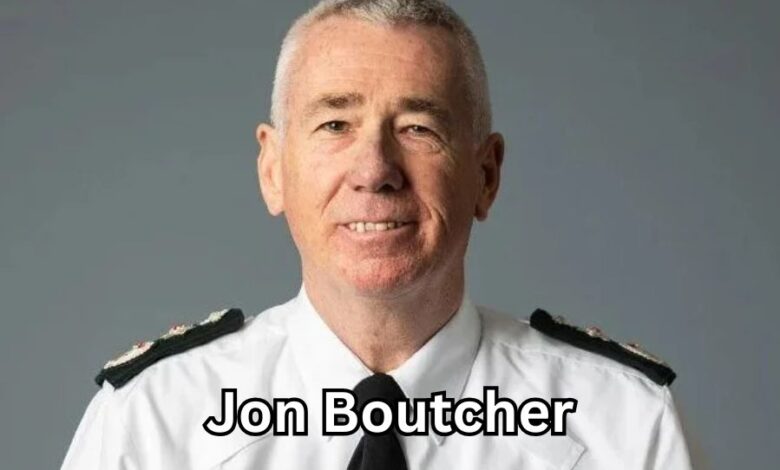
Jon Boutcher: The Senior British Police Leader Shaping Trust, Legacy, and Modern Policing
A powerful look at the PSNI Chief Constable’s career, leadership style, Operation Kenova role, and impact on UK law enforcement

Introduction
Jon Boutcher is one of the most experienced and closely watched police leaders in the United Kingdom. Known for his work in serious crime, counter-terrorism, covert policing, and legacy investigations, he has built a career around some of the most sensitive areas of law enforcement. Today, Jon Boutcher is widely recognized for his role as Chief Constable of the Police Service of Northern Ireland (PSNI), where he leads a force operating in one of the UK’s most complex policing environments.
His career is not defined by a single position. From his early work in the Metropolitan Police to his leadership of Bedfordshire Police and later his central role in Operation Kenova, Jon Boutcher has consistently been associated with difficult investigations, public accountability, and efforts to rebuild confidence between communities and policing institutions. His name is closely associated with Northern Ireland legacy investigations, especially cases linked to the Troubles, where families have waited for decades for answers.
Quick Bio
| Field | Details |
|---|---|
| Full Name | Jon Boutcher |
| Profession | British Police Officer |
| Current Role | Chief Constable of the Police Service of Northern Ireland |
| Known For | Leadership in UK policing, Operation Kenova, serious crime investigations, and counter-terrorism work |
| Previous Role | Chief Constable of Bedfordshire Police |
| Nationality | British |
| Career Focus | Law enforcement, public trust, legacy investigations, covert policing, and community safety |
Who Is Jon Boutcher?
Jon Boutcher is a senior British police officer with decades of policing experience. His professional background covers detective work, national security, counter-terrorism, undercover policing, intelligence-led investigations, and police leadership. He became Chief Constable of the Police Service of Northern Ireland after already holding one of the most demanding senior policing roles in England as Chief Constable of Bedfordshire Police.
What makes Jon Boutcher stand out is the breadth of his experience. Many police leaders rise through operational or administrative routes, but Boutcher’s career combines frontline detective work, strategic intelligence leadership, national policing responsibilities, and public-facing accountability. This mixture has helped shape his reputation as a leader who understands both the practical realities of crime investigation and the broader public trust issues surrounding modern policing.
Jon Boutcher and the Police Service of Northern Ireland
Jon Boutcher’s elevation to Chief Constable of the PSNI positioned him atop a police service fraught with unique obstacles. Policing in Northern Ireland diverges from other parts of the UK due to its historical burden, community divisions, intense scrutiny, security concerns, and unresolved legacy issues stemming from the Troubles.
As PSNI Chief Constable, Jon Boutcher leads officers and staff while cultivating trust across diverse communities. His responsibilities extend beyond fighting crime to safeguarding the legitimacy of policing. In Northern Ireland, trust anchors police effectiveness. Communities must trust the police to be fair, transparent, accountable, and focused on protecting the public.
Under his leadership, the PSNI continues to face challenges linked to funding pressures, public confidence, operational demand, legacy investigations, and modern threats such as organized crime, cybercrime, terrorism, hate crime, and public disorder. Boutcher’s background in high-risk investigations gives him a strong foundation for handling these responsibilities.
Early Career and Detective Background
Before becoming a chief constable, Jon Boutcher spent much of his career as a detective. His early policing work included time with Scotland Yard’s Flying Squad, a well-known Metropolitan Police unit associated with the investigation of armed robbery and serious organized crime. This period helped shape his reputation as an operationally experienced officer rather than as a leader whose career was built solely on office-based command roles.
His background as a detective is important because it helps explain much of his later leadership style. Serious investigations require patience, detail, evidence gathering, intelligence handling, and the ability to make decisions under pressure. These qualities became central to Boutcher’s work in counter-terrorism and legacy investigations.
Experience in Serious Crime and Intelligence
Jon Boutcher’s career developed through areas of policing where intelligence and evidence must be handled carefully. He worked on serious and organized crime matters, counter-terrorism investigations, covert tactics, and national security operations. These fields require a balance between operational secrecy and legal accountability. That balance later became especially relevant in his work on Operation Kenova.
His experience also included national responsibilities in technical surveillance, covert policing, and undercover policing, as well as the Pursue strand of the UK’s counter-terrorism strategy. These roles placed him at the center of policing methods designed to identify threats before they cause wider public harm.
Leadership of Bedfordshire Police
Jon Boutcher served as Chief Constable of Bedfordshire Police, a role that further strengthened his profile as a senior police leader. Bedfordshire is a diverse force area with significant challenges across urban, rural, and organized crime. During his time there, Boutcher became associated with efforts to improve performance, strengthen public trust, and manage complex regional policing responsibilities.
As Bedfordshire Chief Constable, he also oversaw regional serious crime and counter-terrorism, expanding his experience beyond a single county to encompass wider policing networks across eastern England.
Building Trust and Improving Performance
A persistent motif in Jon Boutcher’s career is public trust. In Bedfordshire, his leadership was associated with raising the force’s status and capabilities. In Northern Ireland, that priority intensified, as the relationship between police and communities is inextricably shaped by history.
Trust in policing comes from fairness, competence, transparency, and the willingness to confront difficult truths. Boutcher’s work on legacy investigations demonstrates his willingness to face uncomfortable questions involving state agencies, intelligence, and public concern.
Jon Boutcher and Operation Kenova
Operation Kenova is central to Boutcher’s public career. He led this independent investigation from 2016 to 2023, examining sensitive legacy issues from Northern Ireland’s Troubles, including the alleged British Army agent Stakeknife.
Operation Kenova was no ordinary criminal investigation. It tackled historic allegations, intelligence files, victims’ families, official secrecy, paramilitary violence, and public oversight. The operation had to reconcile national security interests with the rights of families demanding truth and justice.
For many readers, Jon Boutcher is best known for this work. His leadership of Kenova placed him in the middle of a highly sensitive public debate about disclosure, accountability, legacy justice, and the role of the state during the Troubles.
Why Operation Kenova Matters
Operation Kenova matters because legacy investigations shape present views of policing and government. Families seek answers for truth, dignity, and justice—not only politics.
Jon Boutcher’s public statements on legacy investigations emphasize openness, accountability, and meeting victims’ families’ needs. His approach underlines that policing must serve the public interest, even when addressing painful or politically sensitive events.
A Victim-Focused Approach
A major theme in Boutcher’s work has been the importance of keeping victims and families at the center of legacy investigations. This approach recognizes that official processes can become legalistic or bureaucratic, while families continue to live with unanswered questions. By emphasizing the human impact of these cases, Jon Boutcher has helped frame legacy policing as a matter of public trust, not simply a matter of historical review.
Personal Life and Public Image
Jon Boutcher’s personal life is not widely publicized, and responsible biography writing should respect that privacy. Publicly available information focuses mainly on his professional career, leadership roles, and policing achievements. He is known to be a football fan and a follower of Derby County FC, a detail that gives a small personal insight without intruding into private family matters.
His public image is that of a serious, experienced, and direct police leader. He is often associated with difficult conversations about truth, accountability, and institutional responsibility. In a media environment where policing leaders are frequently judged by their crisis responses, Boutcher’s reputation is closely tied to his handling of sensitive, high-pressure issues.
Jon Boutcher’s Impact on Modern Policing
Jon Boutcher’s impact on modern policing is evident in three major areas. The first is operational expertise. His background in serious crime, counter-terrorism, and covert policing gives him deep knowledge of how complex investigations work. The second is leadership. His time as Chief Constable of Bedfordshire Police and then PSNI shows his ability to operate at the highest levels of police command. The third is accountability. Through Operation Kenova, he became a key figure in public discussions about truth, disclosure, and justice in Northern Ireland.
His career reflects the changing expectations placed on police leaders. Modern chief constables are not only expected to reduce crime. They must also explain decisions, protect human rights, manage public confidence, support officers, address historic failures, and respond to new security threats. Jon Boutcher’s career sits directly within that modern policing reality.
Conclusion
Jon Boutcher is a major figure in British policing because his career combines operational experience, strategic leadership, and a clear connection to some of the UK’s most sensitive investigations. As Chief Constable of the Police Service of Northern Ireland, he holds one of the most challenging policing roles in the country. His previous leadership of Bedfordshire Police, his detective background, and his work on Operation Kenova all contribute to a public profile built on serious responsibility rather than celebrity-style attention.
For readers searching for Jon Boutcher, the key story is one of leadership in difficult circumstances. His career shows how modern policing depends not only on enforcement but also on trust, transparency, and the courage to address unresolved questions from the past.
(FAQs)
Who is Jon Boutcher?
Jon Boutcher is a senior British police officer and the Chief Constable of the Police Service of Northern Ireland. He is known for his work in serious crime, counter-terrorism, covert policing, leadership at Bedfordshire Police, and Operation Kenova.
What is Jon Boutcher best known for?
Jon Boutcher is best known for leading Operation Kenova, a major investigation into sensitive Troubles-related legacy matters in Northern Ireland, and for serving as Chief Constable of the PSNI.
Was Jon Boutcher Chief Constable of Bedfordshire Police?
Yes, Jon Boutcher previously served as Chief Constable of Bedfordshire Police before later becoming Chief Constable of the Police Service of Northern Ireland.
What is Operation Kenova?
Operation Kenova was an independent police investigation into legacy matters connected to Northern Ireland’s Troubles, including issues involving intelligence handling, victims’ families, and the alleged agent known as Stakeknife.
Is Jon Boutcher’s personal life public?
Jon Boutcher keeps much of his personal life private. Public information mainly focuses on his policing career, leadership roles, and professional contributions.